
Supporting Your System With Self-Love
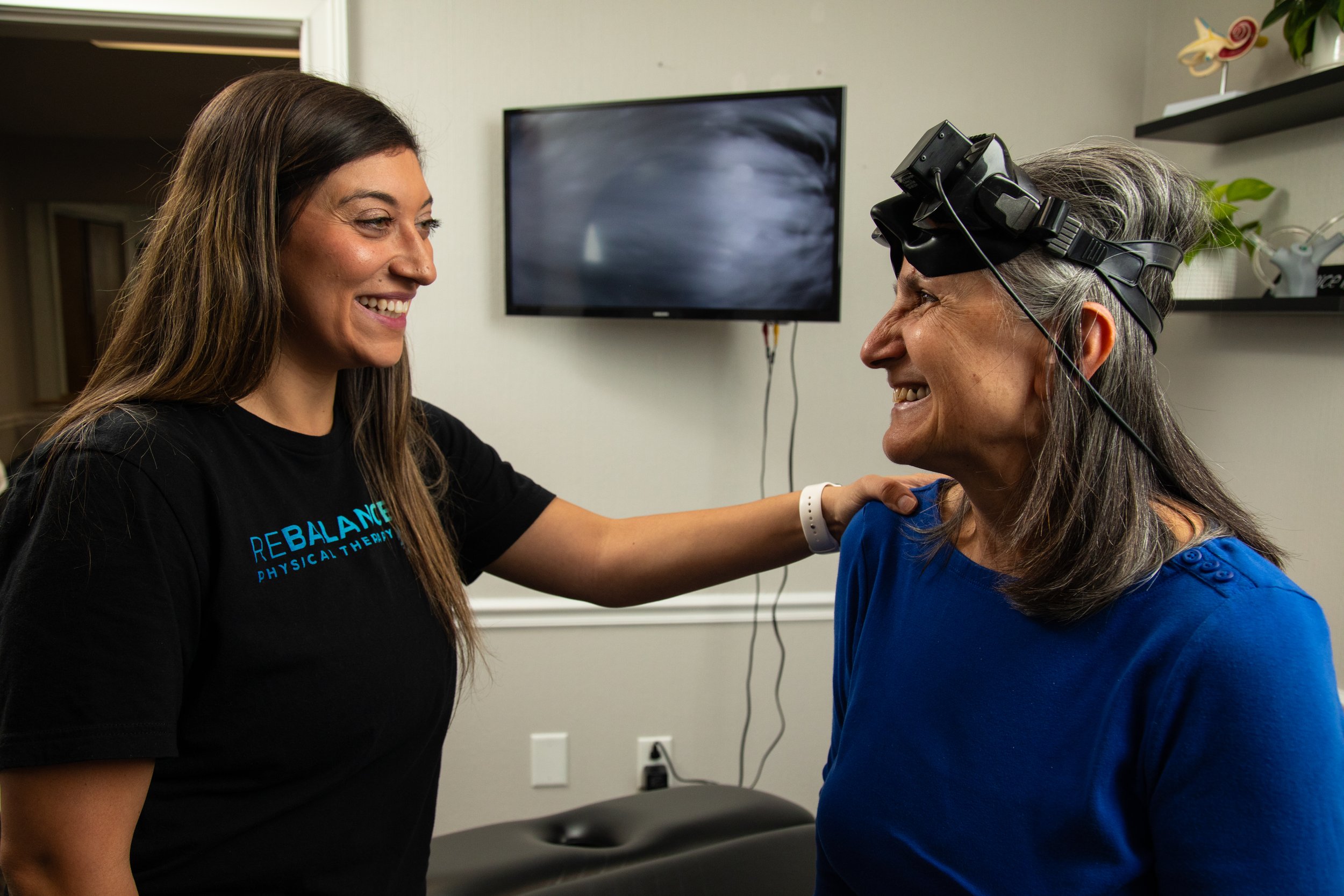
February is often framed around love—romantic gestures, fancy dinners, and showing up for others. But there’s another kind of love that deserves attention this month:
How you care for yourself.
If you’ve been living with dizziness, vertigo, brain fog, or motion sensitivity, self-love might look very different than bubble baths or time off.
It may sound more like this:
“I deserve to feel steady.”
“I deserve answers.”
“I don’t have to keep pushing through this.”
At Rebalance Physical Therapy, we believe caring for your vestibular health is a powerful form of self-care.
When You Stop Trusting Your Body, It Affects More Than Balance
Vestibular symptoms don’t just affect how you move—they affect how you feel about yourself.
Many people quietly experience:
Second-guessing their balance in public
Avoiding busy or visually overwhelming environments
Feeling anxious about driving, traveling, or crowds
Brain fog that makes them feel less sharp or capable
Fatigue from constantly “pushing through” symptoms
Over time, this can chip away at confidence. You may look fine on the outside while constantly managing discomfort on the inside. And eventually, that becomes exhausting.
Adjusting your life around symptoms doesn’t address why they’re there.
Self-Love Isn’t Ignoring Symptoms—It’s Listening to Them
Dizziness is often minimized, both by others and by ourselves. Many people tell us:
“It’s not bad enough to complain about.”
“I’ve learned to deal with it.”
“It’ll probably go away.”
But symptoms are information. They’re your nervous system telling you something isn’t working as efficiently as it could.
Dizziness is not a diagnosis—it’s a signal. And ignoring that signal doesn’t make it go away; it just teaches the body to compensate in ways that can keep symptoms going.
Why Vestibular Symptoms Often Stick Around
When the inner ear, eyes, brain, and neck aren’t communicating clearly, the nervous system adapts—but not always in helpful ways.
Common contributors to ongoing symptoms include:
Vestibular dysfunction that was never fully addressed
Motion sensitivity after illness, concussion, or BPPV
Eye-brain coordination issues causing visual overload
Neck tension contributing to imbalance or fogginess
Avoidance of movement the brain actually needs to recalibrate
Medication may reduce symptoms temporarily, but it doesn’t retrain the system. True change happens when the brain learns how to process movement and visual input again.
What Self-Love Looks Like in Vestibular Physical Therapy
Vestibular physical therapy isn’t about pushing through symptoms or avoiding them forever. It’s about teaching your nervous system that movement is safe again.
At Rebalance Physical Therapy, care is individualized and data-driven. Treatment may include:
Gaze stabilization to reduce visual lag and dizziness
Gradual motion exposure to rebuild tolerance and confidence
Balance training tailored to real-life situations
Visual-vestibular integration for busy environments
Objective eye-tracking data to guide and measure progress
This is not about “toughing it out.” It’s about rebuilding trust between your brain and body.
You Deserve to Feel Comfortable in Your Own Body
Self-love means believing you deserve more than just “getting by.”
If dizziness has affected:
Your confidence
Your independence
Your ability to enjoy everyday activities
Your energy or focus
Your sense of safety in your body
Then it’s worth addressing—not someday, not when it gets worse, but now.
This February, Choose Support Over Survival
Loving yourself doesn’t mean ignoring symptoms or expecting them to disappear on their own. Sometimes, it means asking for help and learning what your body actually needs.
If dizziness, imbalance, or motion sensitivity has been part of your story, know this: improvement is possible. And choosing to explore that is a meaningful act of self-care.
At Rebalance Physical Therapy, we’re here to help you reconnect with your body, rebuild confidence, and move through life with more ease.
Talk to an expert today with a FREE 15-minute consultation.